
In an industry where closed systems have long dictated how machines are built, Bosch Rexroth continues to lean hard into openness. At the company’s 2025 ctrlX AUTOMATION Media Day, executives laid out a vision that blends industrial hardware reliability with software flexibility that turns the controller into an open computing environment rather than a locked-down black box.
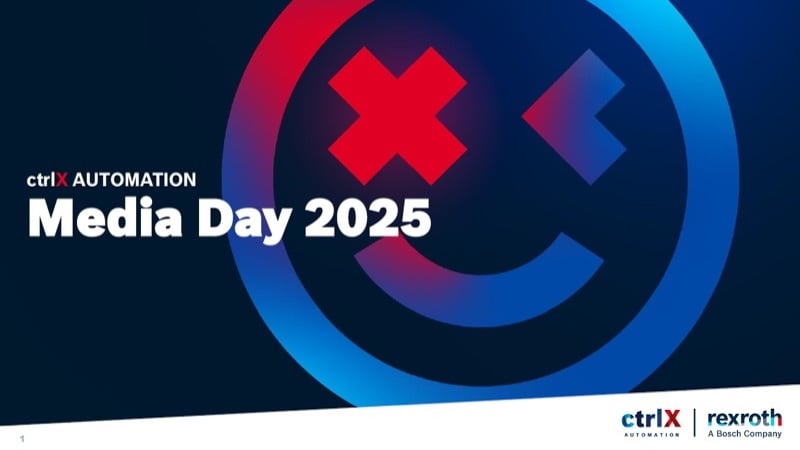
Check out the main information from the ctrlX Automation Media Day 2025. Image used courtesy of Bosch Rexroth
The Media Day event highlighted several milestones for the ctrlX AUTOMATION ecosystem, from the latest updates to ctrlX OS and the growing ctrlX World partner network to new collaborations with firms like Advantech. Together, these moves reinforce Bosch Rexroth’s message that automation’s next era will be defined less by proprietary hardware and more by interoperability, scalability, and developer freedom.
ctrlX OS The Common Operating Layer
ctrlX OS acts as the common language of the ecosystem, built on a Linux foundation that supports real-time control and open collaboration. The system can now run on third-party devices as easily as Rexroth’s own controllers, giving machine builders a single, secure environment for automation and edge processing.
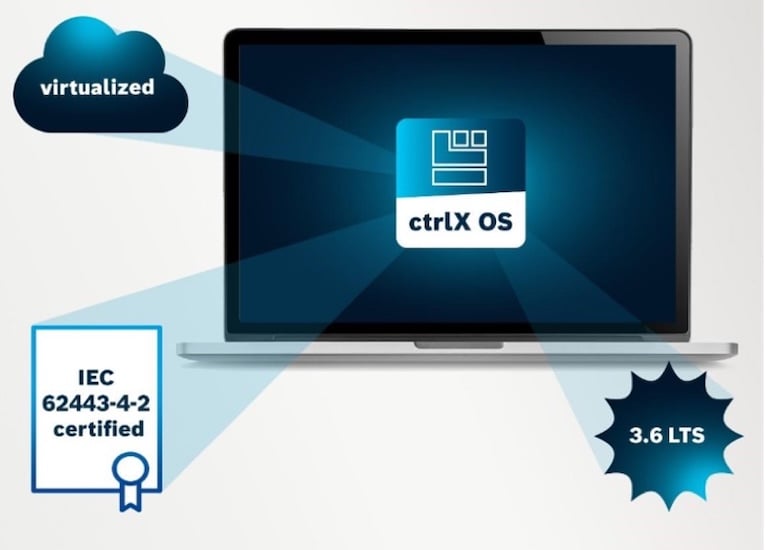
The ctrlX App Store serves as a central marketplace for automation software. Image used courtesy of Bosch Rexroth
The platform’s open architecture gives developers the ability to build and deploy functions using standard programming tools, while its ctrlX App Store serves as a hub for software from both Bosch Rexroth and independent vendors. This approach lets users mix-and-match solutions across different device types, ranging from compact PLCs to industrial PCs and edge nodes, without rewriting code or compromising performance.
According to Bosch Rexroth, expanding ctrlX OS beyond its own hardware portfolio is a key step toward making industrial automation “as open and scalable as the modern IT world.” The company emphasized that the OS can already run on platforms from multiple manufacturers, enabling machine builders to standardize on one software layer even when using diverse components.
Advantech Joins the ctrlX OS Ecosystem
One of the headline announcements from Media Day was Advantech’s adoption of ctrlX OS for its industrial PCs and edge devices. The collaboration brings together Bosch Rexroth’s automation framework and Advantech’s hardware expertise, offering customers a ready-made bridge between factory operations and higher-level IT systems.
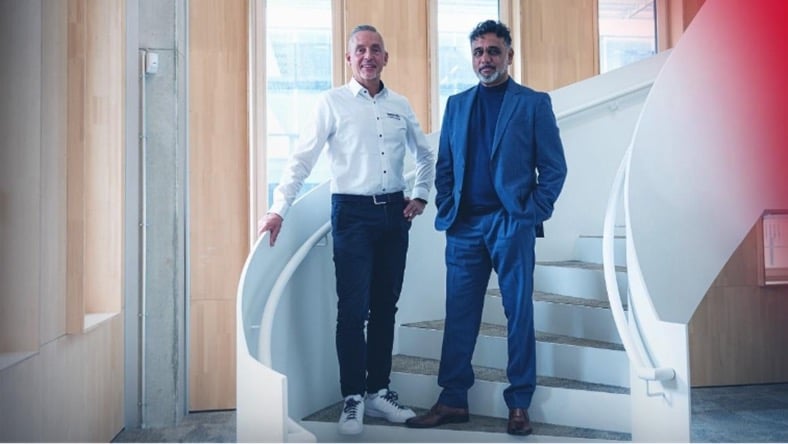
Steffen Winkler, Senior Vice President Sales, Business Unit Automation & Electrification Solutions at Bosch Rexroth (left), and Jash Bansidhar, AVP IoT Automation at Advantech (right). Image used courtesy of Bosch Rexroth
Advantech representatives described ctrlX OS as a “neutral, secure operating foundation” that complements the company’s focus on openness and connectivity. By pre-installing the OS on select edge platforms, Advantech aims to give users faster integration with ctrlX Automation applications while keeping the door open for their own software or cloud environments. For Bosch Rexroth, partnerships like this show how ctrlX OS can serve as a de facto industrial standard, connecting an expanding base of devices under one interoperable control layer.
ctrlX World 2025
If ctrlX OS is the technological heart of the ecosystem, ctrlX World is its community backbone. The initiative now includes over 150 partners, from sensor manufacturers and robotics suppliers to analytics and cloud specialists. All companies contribute apps and services through the ctrlX Store.
The 2025 edition of ctrlX World emphasizes co-creation, allowing partners to publish their own software directly into the ecosystem. Bosch Rexroth positions this as an evolution beyond supplier-customer relationships: a genuine developer marketplace where OEMs, end users, and technology providers can build solutions that interoperate from day one.
As automation systems grow more software-centric, ctrlX World gives companies a faster route to deploy features like energy optimization, AI-based quality control, and remote diagnostics without lengthy integration cycles. ctrlX World also gives smaller developers access to Bosch Rexroth’s global customer base, which is kind of a win-win that reinforces the open-platform philosophy.
A Modular Portfolio for Every Layer of Control
Bosch Rexroth’s broader ctrlX Automation portfolio continues to expand around this open software stack. New controller and I/O families introduced in 2025 focus on modularity and scalability, letting engineers build systems that range from single-axis motion control to full production-line orchestration.
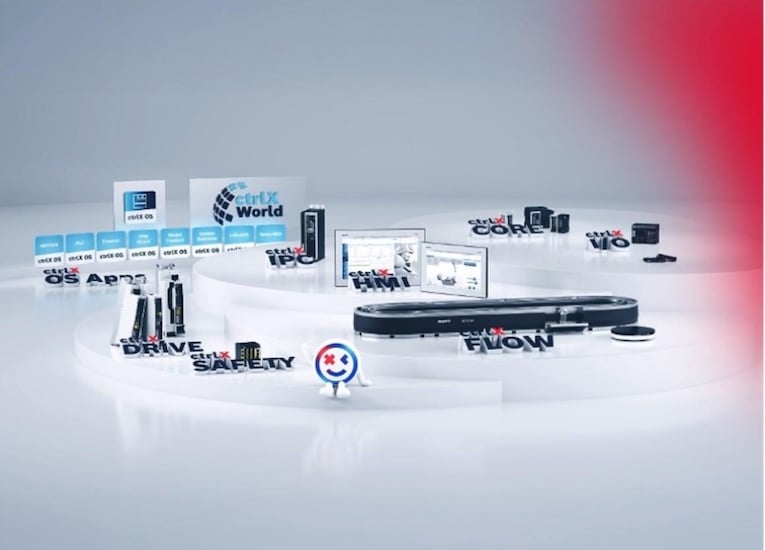
Bosch customers can now expect integrated AI and safety functions. Image used courtesy of Bosch Rexroth
Hardware updates include compact drives with integrated safety functions, communication interfaces for major industrial networks, and edge-ready processors that can run multiple automation tasks in parallel. Each device supports ctrlX OS natively, ensuring that applications and configurations can move seamlessly from prototyping to production.
Security, Simplification, and Longevity
The big focus for Bosch in 2025 was lifecycle management, which was highlighted with long-term software support, signed container packages, and integrated cybersecurity features listed as essential to maintaining reliability in open systems. The company also reaffirmed its commitment to the Linux Foundation’s Industrial Grade Linux standards, helping ensure that ctrlX OS remains secure and stable for the life of the machine.
Maintenance and configuration are handled through the ctrlX Device Portal, which allows centralized updates and remote monitoring. This simplifies fleet management and ensures that devices across global plants stay synchronized, which is somewhat of a necessity as manufacturers push toward connected operations.
By opening ctrlX OS to third-party hardware and expanding ctrlX World, Bosch Rexroth is turning its automation ecosystem into a shared space for innovation. It’s a practical step that helps users protect their investments while staying ready for the next wave of industrial connectivity.