
Three Dimensional Concrete Printing (3DCP) is a novel technique for producing large, structurally sound buildings through a robotic print head. This technique resembles traditional 3D printing, where the print head rasters across the foundation of the building, building layer upon layer, just as a 3D printer builds its structures. However, instead of a thermoplastic polymer, the print is a specialized concrete that holds its shape soon after printing.
Advantages of 3DCP
3DCP has many applications and use cases, from building large structures to repairing existing structures quickly. The primary advantages of new construction are the speed and potential labor savings compared to traditional block construction. Structures can be printed much more rapidly than built and at a lower cost overall.
Regarding labor, the 3DCP process requires specialized operators but not as many laborers overall. Furthermore, manual labor has reduced some more dangerous tasks: lifting cinder blocks, kneeling, and other high-stress activities. These often lead to debilitating ergonomics injuries and early retirement for injured workers. Much construction is typically done during the day, which is the source of many exposure-related injuries, such as heat exhaustion and heat stroke.
The Walmart Project
Recently, Alquist partnered with Walmart to build the world’s first 3D-printed big-box store. The 8000-square-foot store, located in Athens, TN, is one of the largest such structures in the world, with walls over 19 feet high. Furthermore, the structure is seismically sound, meaning it is just as safe as a traditionally built cinder block building.
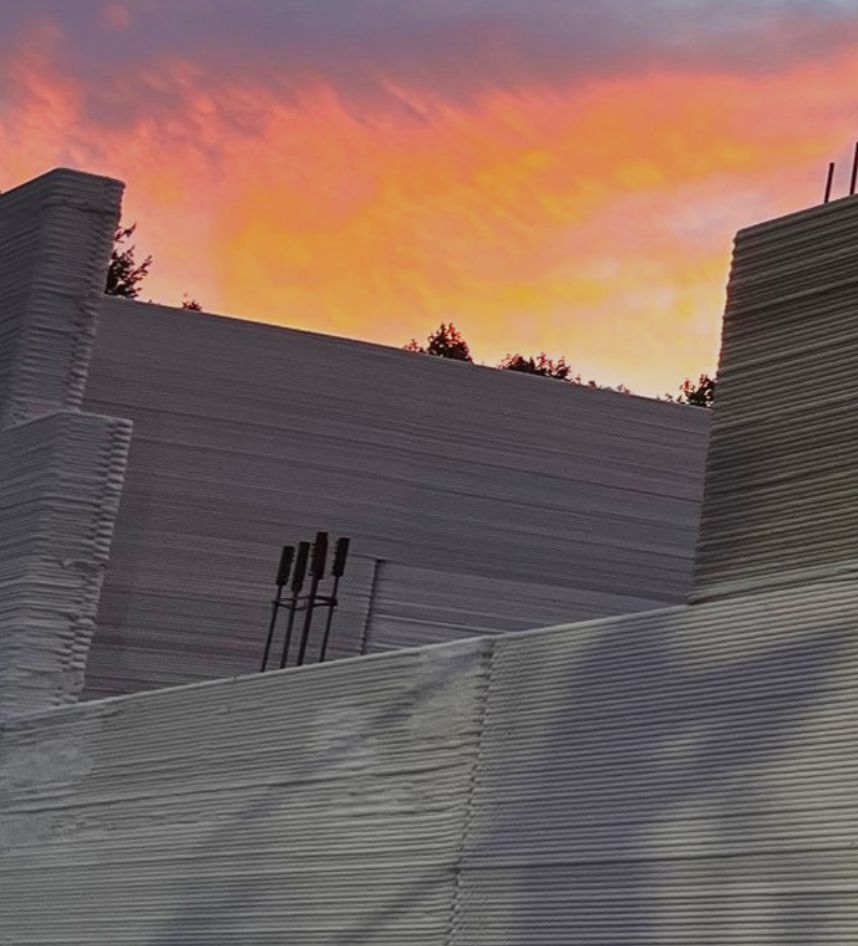
A section of 3D printed wall used in the new Walmart. Image used courtesy of Alquist
Who is Alquist?
Alquist has developed an entire ecosystem around 3DCP. Besides printing mass merchandiser buildings, they have many other additive manufacturing capabilities for construction. The 3DCP process can be heavily customized, and Alquist has positioned itself as the expert in this field.
Due to the complex nature of the printing process, a specialized labor force is required for building. Rather than standing on the sidelines and lamenting that talent is hard to find, Alquist took a proactive approach. They have set up a partnership program with several schools, including Aims Community College, to help train the expertise they need to serve their industry.
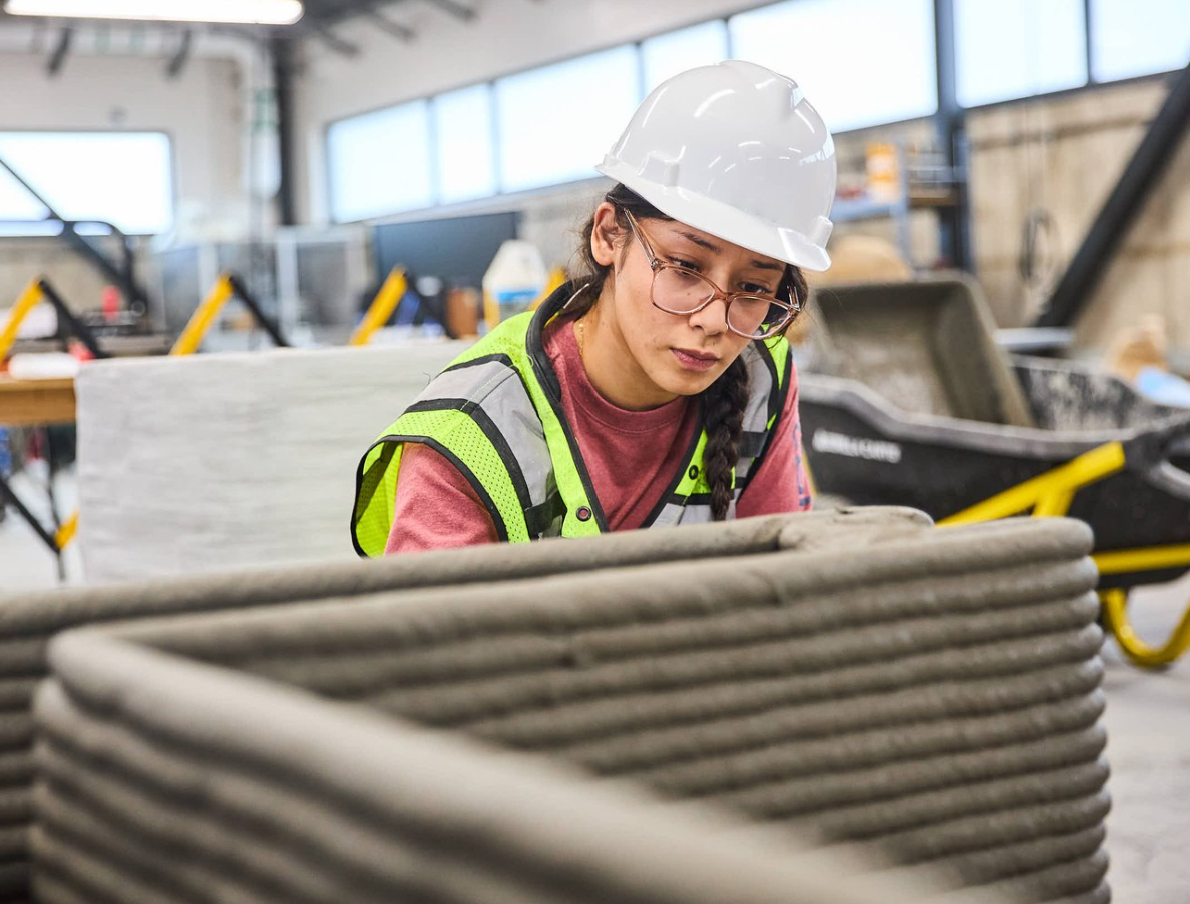
A student at Aims Community College in Greely, CO, working with 3DCP. Image used courtesy of Alquist
Future Applications
Years ago, there was a Garfield cartoon about strip malls growing from seeds. An empty field quickly became a strip mall once the seed was planted and received some water and sunlight. It was obviously a statement on how quickly buildings were constructed.
With 3DCP and Alquist leading the way, buildings will not grow but appear much more quickly and efficiently than ever before. The ability to produce a building, bridge structure, retaining wall, or other complex project quickly will lead to fewer highway delays, rapid repair after natural disasters, and the potential to meet the growing housing shortage.