
The industrial network has been used for well over 30 years now to transmit commands, messages, and images around a factory or a machine. Single Pair Ethernet (SPE) is a relatively new technology that supports the same topologies but only uses a single twisted pair of wires. Recently, Weidmuller USA, a supplier of many different industrial electrical components and automation devices, has released an unmanaged Ethernet switch designed specifically for SPE networks.
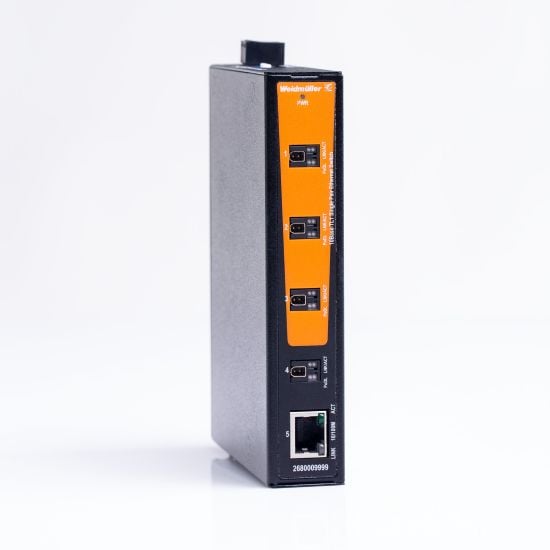
Weidmuller USA’s new unmanaged SPE switch is designed for seamless data transmission. Image used courtesy of Weidmuller
Unmanaged Single Pair Ethernet (SPE) Switch
The latest addition to Weidmuller USA’s portfolio is an unmanaged SPE switch. This switch uses the latest technology for end-to-end communications of sensors, IoT devices, and SCADA systems. The new switch consists of a DIN mountable housing with four 10-Base T1L ports and one RJ45 port. This configuration of ports makes the switch capable of connecting legacy and existing networks.
Designed with automation in mind, the new switch is capable of sending data packets up to 1,000 m and works with the popular fieldbus protocols such as PROFINET. While the switch is unmanaged, there are DIP switches that allow a technician to configure the switch for QoS, MAC multi-cast filtering, PoDL class selection, and SCCP.
SPE connections save space by utilizing a single pair of wires, rather than Ethernet’s traditional two or four pairs. Video used courtesy of Weidmuller
Industrial Ethernet Connectivity
Standard Ethernet has been around for a long time and has been used extensively in industrial automation for over 20 years. When an infrastructure is this embedded in the industry, it is hard for people to change, but the benefits of SPE might just change your mind.
IoT is becoming very popular, and people want data from sensors, motors, and actuators sent directly to a cloud system so they can mine that data over time. This need for data is where SPE shines. SPE can transmit data directly from a pressure sensor to an edge server and then to the cloud using only one pair of wires. The industry could take it one step further and connect that pressure sensor directly to the internet and interface with the cloud directly.
Space within ducting or cables is always a concern for manufacturers, but using a communication technology that uses a fourth of the wires reduces space and allows for tighter bend radii. This technology opens doors for manufacturers to include power and communication in one cable and allows designers to build sensors that are more connected and more compact than before.
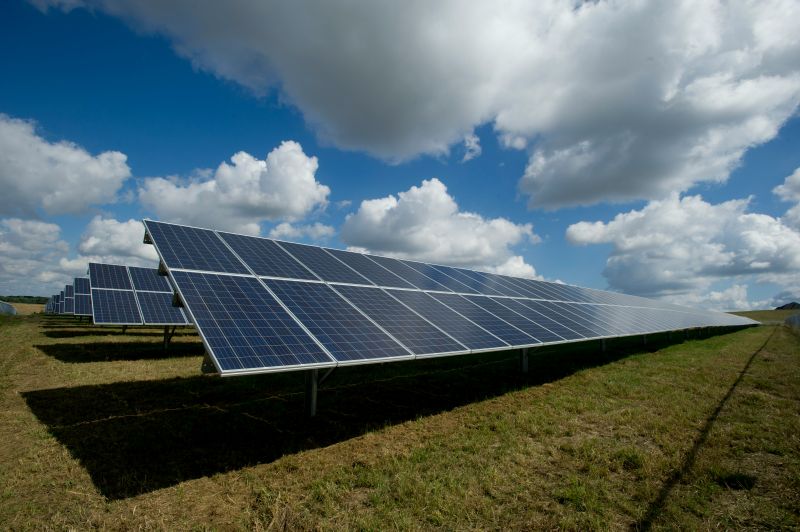
SPE technology could benefit remote applications, such as an unmanned solar farm that produces large amounts of power. Image used courtesy of Unsplash
Remote Automation
There are many applications where sensors are used in remote, unattended locations. Solar farms and oil fields are just some examples where temperature, pressure, or electrical measurements need to be monitored. What if these sensors could connect to the internet, and a remote SCADA system could display their values? Technicians would simply log into a web page and view the sensor data in real time. With SPE technology and devices like the new unmanaged SPE switch from Weidmuller, this hypothetical situation might just become reality.